HONDA VE-91AA Carburetor
fits model: Trx300, Fourtrax. make: Honda. year: 1988–2000.
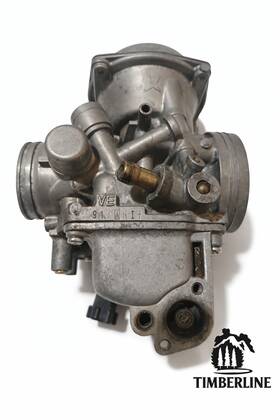
( Manufacturer Part Number: VE-91AA ), ( Machine Type: Atv ), ( Material: Aluminum ), ( Vintage Part: No ), ( California Prop 65 Warning: Proposition 65 Warning For California Consumers. ), ( Engine Type: 4-stroke ), ( Choke Type: Mechanical ), ( Type: Carburetor ), ( Oe/oem Part Number: 16100-5-01, 16100-4-033, 16100-4-013 ), ( Features: Throttled )
Review HONDA Rebuilt Oem Carburetor fits FOURTRAX TRX300 1988–2000
The **Honda VE-91AA carburetor**, found in the **TRX300 FourTrax models from 1988 to 2000**, is a precision-engineered component designed to deliver optimal performance, reliability, and fuel efficiency to Honda s iconic off-road ATVs. This carburetor is a **Pike carburetor model VE-91AA**, a trusted brand known for its durability and consistent airflow management, ensuring smooth throttle response and consistent power delivery across varying terrain. The VE-91AA features a **single-choke design** with a **floating bowl**, allowing for easy maintenance and adjustments, which is essential for riders who frequently traverse rough trails or modify their ATVs for performance tuning. Its **aluminum body** is lightweight yet robust, reducing unnecessary weight while maintaining structural integrity, and the **rubber grommets and seals** provide a secure fit, preventing fuel leaks and air infiltration that could disrupt engine performance.
This carburetor operates on Honda s **CVT (Continuously Variable Transmission) system**, which relies on precise fuel-air mixture control to maintain optimal engine speed and torque. The **pilot jet and main jet** are calibrated to work seamlessly with the TRX300 s **air-cooled, single-cylinder engine**, ensuring efficient combustion and power output whether cruising on paved roads or tackling steep, rocky off-road trails. The **throttle valve** is designed for smooth operation, minimizing hesitation and providing responsive acceleration critical for riders who demand agility and control in dynamic off-road conditions. Additionally, the **fuel pump and diaphragm** within the carburetor are engineered to handle the TRX300 s fuel delivery requirements, preventing vapor lock and ensuring consistent power even under demanding conditions.
For enthusiasts and mechanics, the VE-91AA offers **easy accessibility and serviceability**, with standard components that can be adjusted or replaced with minimal tools. The **needle and seat assembly** can be fine-tuned for better idle stability or throttle response, while the **float level** can be adjusted to optimize fuel flow and prevent flooding. Over the years, this carburetor has earned a reputation for longevity, often lasting the lifespan of the TRX300 with proper maintenance, though wear over time may necessitate cleaning or replacement of the **jetter or gaskets**. When paired with a well-maintained air filter and clean fuel system, the VE-91AA ensures that the TRX300 s legendary reliability and off-road prowess remain intact, making it a cornerstone component for both stock and modified applications. Whether used in a restored classic ATV or a performance-tuned trail beast, this carburetor continues to deliver the balance of power, efficiency, and durability that Honda riders have come to expect.
### **Pros and Cons of Buying a 1988 2000 Honda VE-91AA TRX300 FourTrax (Carbureted Model)**
#### **Pros**
**1. Reliability and Durability**
The TRX300 is widely regarded as one of Honda s most durable off-road engines. The VE-91AA engine, in particular, is known for its robust construction, simple design, and ability to handle rough terrain without frequent breakdowns. Many units last well over 10,000 hours with basic maintenance.
**2. Availability of Parts and Service Support**
Honda s legacy in off-roading means parts for the TRX300 are still widely available, both new and aftermarket. Dealerships, specialty shops, and online retailers carry everything from carburetors and pistons to belts, chains, and filters. This makes repairs and maintenance more accessible than on older or less common models.
**3. Proven Performance**
The carbureted TRX300 delivers consistent power (around 25 30 horsepower) and torque, making it suitable for light trail riding, recreational use, and even light-duty work. The engine responds well to basic tuning (e.g., carburetor adjustments, exhaust modifications) for improved performance without requiring expensive upgrades.
**4. Simplicity and Ease of Maintenance**
Compared to modern fuel-injected or turbocharged engines, the carbureted TRX300 is straightforward to work on. Basic tasks like carburetor cleaning, air filter changes, and chain adjustments can be done by an experienced rider with minimal tools. This reduces long-term ownership costs.
**5. Resale Value and Community**
The TRX300 holds its value better than many older ATVs due to its reputation for reliability. There s also a strong community of enthusiasts who share knowledge, modifications, and restoration tips, making it easier to find help or advice when needed.
**6. Off-Road Capability**
The TRX300 s suspension, drivetrain, and lightweight frame are well-suited for trails, rocks, and light mud. While not as aggressive as modern ATVs, it excels in conditions where weight and simplicity are advantages.
**7. Cost-Effective to Own**
Fuel efficiency is decent for its class, and the engine s longevity means fewer unexpected repairs. Parts are affordable, and labor costs are lower than for newer models. For casual riders, it s a practical choice without the high maintenance of older or more complex ATVs.
---
#### **Cons**
**1. Age and Wear**
The TRX300 is now over 30 years old, meaning parts may degrade over time, especially if the ATV has seen heavy use. Common wear points include the clutch, transmission seals, suspension bushings, and carburetor internals. Buyers should inspect these areas closely during a purchase.
**2. Carburetor Sensitivity**
Carbureted engines require more attention than fuel-injected ones. The VE-91AA s carburetor can drift over time, leading to poor idle, hesitation, or rich/lean running. This demands regular cleaning, jetting adjustments, and occasional rebuilds. Riders unfamiliar with carburetor maintenance may find this frustrating.
**3. Limited Modern Features**
The TRX300 lacks modern conveniences like electronic fuel injection, traction control, or advanced suspension systems. It has a basic analog speedometer, minimal lighting, and no digital diagnostics. For riders who prioritize tech and comfort, this can feel outdated.
**4. Suspension and Comfort**
The suspension is adequate for light trails but can feel stiff and uncomfortable on rough terrain compared to modern ATVs. The seat is narrow and hard, and the lack of ergonomic design may lead to fatigue during long rides.
**5. Fuel and Emissions Concerns**
While not as restricted as modern ATVs, the TRX300 may not meet current emissions standards in some regions, limiting where it can be legally ridden. Gasoline quality can also affect performance, as older engines are more sensitive to fuel additives and ethanol blends.
**6. Limited Power for Aggressive Use**
At 25 30 horsepower, the TRX300 is not suited for heavy-duty work, towing, or aggressive off-roading. It struggles with steep climbs, deep mud, or carrying heavy loads compared to modern ATVs or larger engines.
**7. Potential for Hidden Issues**
Older ATVs often hide problems like:- **Clutch wear**: A common failure point that can lead to slipping or complete clutch failure.
- **Transmission leaks**: Seals and gaskets degrade over time, leading to oil leaks.
- **Suspension damage**: Bushings and shocks may be worn out, affecting handling.
- **Electrical gremlins**: Ignition coils, switches, and wiring can fail, causing starting or electrical issues.
Buyers should perform a thorough inspection or have a mechanic check the ATV before purchasing.
**8. Parts Scarcity for Rare Modifications**
While basic parts are easy to find, specialized or aftermarket upgrades (e.g., custom exhausts, high-performance carburetors, or modern suspension) may require sourcing from niche suppliers, increasing costs.
---
### **Conclusion**
The 1988 2000 Honda TRX300 (VE-91AA carbureted) is a **great choice for riders who prioritize reliability, simplicity, and off-road capability without modern frills**. It s ideal for casual trail riding, commuting, or light work where durability and low maintenance are key. However, it s not suited for those seeking high performance, comfort, or the latest technology.
**If you re buying one:**- **Look for an ATV with low hours** (under 5,000 7,000) and a service history.
- **Inspect critical components**: clutch, transmission, suspension, carburetor, and electrical system.
- **Budget for maintenance**: carburetor adjustments, chain/timing belt replacement, and suspension refreshes will be necessary over time.
- **Consider fuel type**: Use high-quality gasoline (avoid ethanol blends if possible) to prolong engine life.
**If you re not sure:**- A newer fuel-injected ATV (e.g., Honda TRX250X, Yamaha Grizzly, or modern Can-Am/DH) may offer better comfort, power, and ease of use for the same price.
- A restored classic TRX300 can be a rewarding project, but it requires patience and mechanical skill.
### **Final Recommendation**
**Buy the TRX300 if:**- You want a **simple, reliable, and low-cost** ATV for light off-roading or daily use.
- You re comfortable with **basic maintenance** (carburetor tuning, chain adjustments, etc.).
- You appreciate **Honda s legacy** and don t need modern features.
**Avoid the TRX300 if:**- You seek **high performance, comfort, or advanced technology**.
- You plan to **ride aggressively** (heavy trails, towing, or frequent long-distance use).
- You re not willing to **invest time in upkeep** or have limited mechanical experience.
For most buyers, the TRX300 remains a **solid, budget-friendly ATV** but one that demands respect for its age and requires proactive ownership.
Details:
part #: ve91aa price
- $32.53
specifications carbthrotatv:
- for models: Trx300, Fourtrax
- for makes: Honda
- for years: 1988-2000
- mpn: Ve-91aa
- machine type: Atv
- material: Aluminum
- vintage part: No
- california prop 65 warning: Proposition 65 Warning For California Consumers.
- engine type: 4-stroke
- choke type: Mechanical
- type: Carburetor
- oe/oem part number: 16100-5-01, 16100-4-033, 16100-4-013
- features: Throttled
seller carbthrotatv:
- city: Marble Falls, Arkansas
- # reviews: 289
- rating: 100.0%
general carbthrotatv:
- ATV, Side-by-Side UTV Parts Accessories > Air Intake Fuel Delivery > Carburetors
- condition: Remanufactured
offer carbthrotatv:
- quantity: 1
- best offers: True
- availability: In Stock
- started: February 14, 2026
- sold: 0
- options: Ship-to-home
returns carbthrotatv:
- policy: No Returns
shipping carbthrotatv:
- type: Calculated
- service: USPS Ground Advantage
- carrier: USPS
- cost: $7.57
- class: Standard
- transit: 6-11 Days
payments carbthrotatv:
- other
- wallet: Paypal
- credit card: Visa
Honda VE-91AA Is Similar To:
- 01mv3a Maxpeedingrods Carburetor For Honda Carb (29.4% similar) 2ND at 5:00AM APR. 1ST at 5:00AM APR. 1x black throttle base cover. How much does delivery cost and long will it take. For honda TRX450FE, TRX450FM foreman quantity: 1x carburetor. 1ST at 4:30AM APR. If you paid item shipped on est...(October 29th, 2018)
- 03a5kg Maxpeedingrods Genuine Quality Carburetor Carby For Honda Trx Rancher (23.2% similar) For example, you paid at 11AM on Nov. Return items must be in original condition. The same rule applies to ups 2ND day air service. 1x throttle base cover screw. Return item must be in brand new and unused condition with original tags packaging. O ther items you might also like for BMW 320D x3 M47TU...(June 22nd, 2018)
- 092307-11008 1986 Atc250sx 1985 Carb 1987 Honda Carburetor (26.7% similar) ...(August 13th, 2015)
- 0f3h9i Maxpeedingrods Carburetor For Honda Heat Sensor Bin (26.7% similar) 7TH after APR. How much does delivery cost and long will it take. 1x throttle base cover screw. 1ST at 5:00AM APR. Opening hours: 7X24 hours, always here for you. 2ND at 5:00AM APR. 1x black throttle base cover. For honda trx 450ES foreman 450FE 450FM TRX450S quantity: 1x carburetor. Favorite search...(March 4th, 2019)
- 0qwrzd Maxpeedingrods Carburetor Fit Honda (30.8% similar) Honda trx 450ES foreman 450FE 450FM TRX450S quantity: 1x carburetor. 1ST at 5:00AM APR. 7TH after APR. How much does delivery cost and long will it take. 2ND at 5:00AM APR. Opening hours: 7X24 hours, always here for you. 1x black throttle base cover. 1ST at 4:30AM APR. If you paid item shipped on ...(January 16th, 2018)
- 11-11-14 Honda Trx Carburetor Assembly (42% similar) Brand: handcart type: carburetor assembly manufacturer part number: engine model: trx 250 fourtrax condition: used works comments: this was working when removed. Special exclusions or considerations are listed in the comments below. Derricks outboards is selling this item for immediate purchase...(June 14th, 2018)
- 16013-hn5-671 Honda Atv Carburetor Float (37.3% similar) ...(May 6th, 2018)
- 16014-men-732 Honda Kehin Fcr Carb Carburetor Slide Top Cover Cap (37.8% similar) Machines listed above can use alternate parts on model's stated depending build date, trim and specific model the way manufactures state their fitment guides. Note: if there is an application guide posted above, it just that, a guide, not all inclusive list. This is in good used condition and shows ...(February 1st, 2019)
- 16015-hm8-000 Honda Nos Oem Carburetor Float Bowl Chamber Recon Sportrax (32.8% similar) New oem honda carburetor bowl for your recon and Sportrax 250 model's listed. Highest quality oem part for less...(March 2nd, 2018)
- 16015-hn1-003 Honda Carburetor Carb (35.1% similar) Could use a quick cleaning. Items are shipped using USPS, ups, and FedEx. Please through messages. Was removed from a running 2002 honda TRX400EX. Has light wear. Carburetor is in good condition. Comes as pictured...(March 27th, 2019)
- 16015ha0682 Honda 1988 Trx350 Fourtrax (44% similar) 16015HA0682. Used 1988 honda TRX350 fourtrax carburetor bowl...(July 18th, 2017)