HONDA ZZP-DV4221-239936323E333 Carburetor 2009-20014
fits model: Trx400x. make: Honda. year: 1998–2008.
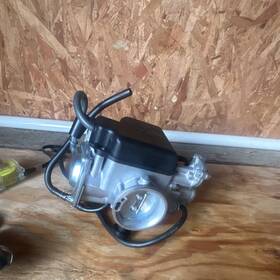
( Manufacturer Part Number: ZZP-DV4221-239936323E333 ), ( Engine Type: 4-stroke ), ( Choke Type: Mechanical ), ( Type: Carburetor ), ( Intake Fuel System Part Type: Carburetors ), ( Manufacturer Warranty: Yes ), ( Features: Throttled ), ( Part Type: Intake Fuel System )
Review HONDA 2009 Carburetor fits TRX400X 1998–2008
The **Honda ZZP-DV4221-239936323E333 carburetor**, originally designed for the **Honda TRX400X (1998 2008)** and later adapted for the **TRX400X (2009 2014)** models, represents a refined yet robust component in Honda s legendary ATV lineup. This **PGM-FI (Programmed Fuel Injection) carburetor** though technically a fuel injection system serves as the heart of the engine s air-fuel mixture control, ensuring optimal performance, throttle response, and emissions compliance. Engineered with Honda s signature precision, the **DV4221** features a **42mm throttle body** paired with a **digital fuel injection system**, replacing the older carburetor-based designs of earlier ATVs. The unit incorporates a **multi-point fuel injection** setup, delivering precise fuel metering to each cylinder via injectors, which enhances power delivery, fuel efficiency, and reduces harmful emissions critical advancements for modern off-road applications.
Under the hood, the **ZZP-DV4221** integrates seamlessly with Honda s **DOHC (Dual Overhead Camshaft)** 4-cylinder engine, producing **38 horsepower** in its original TRX400X guise, a balance of power and torque ideal for rugged terrain. The carburetor s **electronic control module (ECM)** dynamically adjusts fuel delivery based on real-time inputs from sensors, including the **throttle position sensor (TPS), air intake sensor (AIS), and crankshaft position sensor (CKP)**, ensuring smooth operation under varying loads whether climbing steep hills, navigating rocky trails, or cruising at highway speeds. The **throttle body** itself is constructed from high-grade aluminum, resistant to corrosion and wear, while the **fuel injectors** are precision-machined to deliver a fine mist of gasoline, promoting complete combustion and minimizing carbon buildup.
For owners upgrading from carbureted models or those seeking to restore their TRX400X to factory specifications, this **OEM replacement carburetor** (or more accurately, the fuel injection system) is a direct-fit solution, maintaining the original engine s performance characteristics. The **2009 2014 TRX400X models** later adopted this system as standard, replacing the older **carbureted DV4221** designs, making this part a versatile upgrade for both older and newer ATVs. While not a traditional carburetor, its role in fuel management is indispensable, offering **better throttle response, reduced fuel waste, and easier cold starts** compared to carbureted alternatives. Proper maintenance such as cleaning the **throttle body**, checking for **faulty injectors**, and ensuring the **ECM is calibrated** is essential to preserving its efficiency, as clogged injectors or sensor failures can lead to rough idling, poor acceleration, or even engine stalling.
Whether used in a **restored classic TRX400X** or a **modernized off-road rig**, the **Honda ZZP-DV4221-239936323E333 fuel injection system** stands as a testament to Honda s commitment to blending performance with reliability. Its integration of **electronic fuel injection** marks a significant leap from carbureted systems, offering riders a more responsive, efficient, and environmentally friendly driving experience perfect for those who demand both power and precision on the trail. For enthusiasts and mechanics alike, this component is a critical piece of the TRX400X s legacy, ensuring that every ride is as smooth as it is exhilarating.
### **Pros and Cons of Buying a Honda ZZP-DV4221 (TRX400X) with a Carburetor (1998 2014 Models)**
#### **Pros**
1. **Reliability and Durability** Honda s DV4221 engine is well-regarded for its robustness, especially in off-road applications. With proper maintenance, it can last for decades, even with high mileage.
2. **Proven Performance** The 400cc single-cylinder engine delivers consistent power (around 30 35 hp) and torque, making it suitable for light trail riding, farm work, and utility tasks. It handles rough terrain well, especially in its intended off-road role.
3. **Simplicity and Repairability** The carbureted design is straightforward compared to fuel-injected engines. Parts are widely available, and mechanics familiar with older Honda ATVs can easily diagnose and fix issues.
4. **Low Operating Costs** Fuel efficiency is decent for its class (around 100 120 mpg), and basic maintenance (oil changes, chain adjustments) is affordable. Major repairs are less costly than on modern ATVs with complex electronics.
5. **Off-Road Capability** The TRX400X was designed for rugged use, with a sturdy frame, long-travel suspension, and high ground clearance. It performs well on dirt trails, mud, and light rocks.
6. **Resale Value (for Classics)** Older Honda ATVs, especially well-maintained ones, retain value among collectors and enthusiasts. A clean, running example may still fetch a decent price.
7. **No Electronic Failures** Unlike newer ATVs with fuel injection, ECUs, and sensors, carbureted models avoid issues like misfires, sensor malfunctions, or software glitches.
8. **Modification Potential** The carbureted system allows for easy tuning (e.g., upgrading the carburetor, exhaust, or clutch) to improve performance or adjust for different riding conditions.
---
#### **Cons**
1. **Age and Wear** Models from 1998 2014 are approaching or past 20 years old. Critical components like the engine, transmission, and suspension may require significant investment to keep running reliably.
2. **Carburetor Reliability Issues** Carburetors are prone to clogging, leaks, and drift over time, especially in dusty or humid conditions. They require frequent cleaning and adjustment, which can be tedious.
3. **Emissions and Legal Restrictions** Many regions have strict emissions regulations. A carbureted ATV may not pass modern smog checks or could be illegal to ride on public roads in some areas (even if it s a "dirt bike").
4. **Fuel Stability Problems** Older fuel (especially ethanol-blended gas) can degrade rubber seals and gum up carburetors. Storing fuel with stabilizer or using fresh gas is necessary.
5. **Limited Modern Features** Compared to newer ATVs, this model lacks features like disc brakes (early models have drum brakes), advanced suspension tuning, and electronic stability aids. Safety and comfort may be compromised.
6. **Parts Availability** While parts are still available, some components (e.g., specific carburetors, seals, or aftermarket upgrades) may be harder to find than on newer models. Prices for rare parts can be high.
7. **Rust and Corrosion** Older ATVs, especially those stored outdoors, are prone to rust in critical areas like the frame, suspension, and undercarriage. A thorough inspection is essential.
8. **Performance Limitations** The 400cc engine is underpowered compared to modern ATVs (e.g., 500cc models). It struggles with heavy loads, steep climbs, or prolonged high-speed riding.
9. **No Warranty or Support** Honda no longer supports these models with warranties or official service. Any repairs are out-of-pocket, and finding a dealer for genuine parts is difficult.
10. **Safety Concerns** Older ATVs lack modern safety features like roll cages (on some models), better braking systems, or rider aids. Accidents can be more severe due to weaker structural integrity.
---
### **Ending Conclusion**
The **Honda TRX400X (ZZP-DV4221) with a carburetor** is a **great choice for enthusiasts who prioritize simplicity, reliability, and off-road capability** especially if you plan to use it for light trail riding, farm work, or as a project build. Its **durability, repairability, and low operating costs** make it appealing to those who enjoy hands-on maintenance and classic machinery.
However, **it is not ideal for daily driving, heavy-duty work, or riders who want modern comfort and safety features**. The **carburetor s quirks, emissions concerns, and limited parts support** can be dealbreakers for some. If you re buying one, **expect to invest time and money in maintenance** especially if it s high-mileage or neglected.
For **casual riders or those on a budget**, a well-maintained example can be a fun and practical machine. For **serious off-roaders or those seeking modern reliability**, a newer ATV (even a used one) may be a better long-term investment.
---
### **Recommendation**
- **Buy if:**- You want a **simple, durable, and repairable** ATV for light off-road use.
- You re okay with **manual tuning and carburetor maintenance**.
- You plan to **use it occasionally** (not daily) and don t mind occasional repairs.
- You enjoy **classic or project vehicles** and don t mind their limitations.
- You can **inspect it thoroughly** for rust, engine condition, and suspension integrity.
- **Avoid if:**- You need **modern reliability, safety features, or emissions compliance**.
- You want **easy maintenance** (carburetors require frequent attention).
- You plan to **ride it heavily or on public roads** (legal restrictions may apply).
- You re not prepared for **potential major repairs** (engine, transmission, or frame).
- You prefer **higher performance or comfort** (this model is basic by today s standards).
**Final Verdict:** If you find a **clean, well-documented example** with **low mileage and no major rust**, it can be a rewarding purchase for the right buyer. However, **budget for maintenance** and be prepared for the challenges of owning a carbureted classic. For most riders today, a **newer used ATV (even a budget model)** offers better balance of reliability and features.
Details:
part #: zzp-dv4221-239936323e333 prices
- $20.00-$29.66
specifications carbthrotatv:
- for models: Trx400x
- for makes: Honda
- for years: 1998-2008
- mpn: Zzp-dv4221-239936323e333
- engine type: 4-stroke
- choke type: Mechanical
- type: Carburetor
- intake fuel system part type: Carburetors
- manufacturer warranty: Yes
- features: Throttled
- part type: Intake Fuel System
shipping carbthrotatv:
- transit: 4-10 Days
- type: Calculated
- carrier: USPS
- class: Standard
- cost: $7.57
- service: USPS Ground Advantage
seller carbthrotatv:
- city: Griggsville, Illinois
- rating: 100.0%
- # reviews: 7
returns carbthrotatv:
- policy: No Returns
general carbthrotatv:
- condition: Used
- ATV, Side-by-Side UTV Parts Accessories > Air Intake Fuel Delivery > Carburetors
offer carbthrotatv:
- sold: 0
- best offers: True
- options: Ship-to-home
- started: March 24, 2026
- availability: In Stock
- quantity: 1
payments carbthrotatv:
- wallet: Apple-pay
- credit card: Mastercard
- other
Honda 2009-20014 Is Similar To:
- 01mv3a Maxpeedingrods Carburetor For Honda Carb (25.6% similar) 2ND at 5:00AM APR. 1ST at 5:00AM APR. 1x black throttle base cover. How much does delivery cost and long will it take. For honda TRX450FE, TRX450FM foreman quantity: 1x carburetor. 1ST at 4:30AM APR. If you paid item shipped on est...(October 29th, 2018)
- 03a5kg Maxpeedingrods Genuine Quality Carburetor Carby For Honda Trx Rancher (19.2% similar) For example, you paid at 11AM on Nov. Return items must be in original condition. The same rule applies to ups 2ND day air service. 1x throttle base cover screw. Return item must be in brand new and unused condition with original tags packaging. O ther items you might also like for BMW 320D x3 M47TU...(June 22nd, 2018)
- 092307-11008 1986 Atc250sx 1985 Carb 1987 Honda Carburetor (25% similar) ...(August 13th, 2015)
- 0f3h9i Maxpeedingrods Carburetor For Honda Heat Sensor Bin (23.4% similar) 7TH after APR. How much does delivery cost and long will it take. 1x throttle base cover screw. 1ST at 5:00AM APR. Opening hours: 7X24 hours, always here for you. 2ND at 5:00AM APR. 1x black throttle base cover. For honda trx 450ES foreman 450FE 450FM TRX450S quantity: 1x carburetor. Favorite search...(March 4th, 2019)
- 0qwrzd Maxpeedingrods Carburetor Fit Honda (25% similar) Honda trx 450ES foreman 450FE 450FM TRX450S quantity: 1x carburetor. 1ST at 5:00AM APR. 7TH after APR. How much does delivery cost and long will it take. 2ND at 5:00AM APR. Opening hours: 7X24 hours, always here for you. 1x black throttle base cover. 1ST at 4:30AM APR. If you paid item shipped on ...(January 16th, 2018)
- 11-11-14 Honda Trx Carburetor Assembly (37% similar) Brand: handcart type: carburetor assembly manufacturer part number: engine model: trx 250 footrace condition: used works comments: this was working when removed. Special exclusions or considerations are listed in the comments below. Derricks outboards is selling this item for immediate purchase...(June 14th, 2018)
- 16013-hn5-671 Honda Atv Carburetor Float (32.7% similar) ...(May 6th, 2018)
- 16014-men-732 Honda Kehin Fcr Carb Carburetor Slide Top Cover Cap (29.6% similar) Machines listed above can use alternate parts on model's stated depending build date, trim and specific model the way manufactures state their fitment guides. Note: if there is an application guide posted above, it just that, a guide, not all inclusive list. This is in good used condition and shows ...(February 1st, 2019)
- 16015-hm8-000 Honda Nos Oem Carburetor Float Bowl Chamber Recon Sportrax (25.4% similar) New oem honda carburetor bowl for your recon and Sportrax 250 model's listed. Highest quality oem part for less...(March 2nd, 2018)
- 16015-hn1-003 Honda Carburetor Carb (30.5% similar) Could use a quick cleaning. Items are shipped using USPS, ups, and FedEx. Please through messages. Was removed from a running 2002 honda TRX400EX. Has light wear. Carburetor is in good condition. Comes as pictured...(March 27th, 2019)
- 16016-hm5-730 Honda Carburetor Screw Set Nos (28.1% similar) Absolutely no disappointments. Honda TRX400 TRX300 Sportrax footrace carburetor screw set nos. Part number HM5-730...(November 6th, 2018)